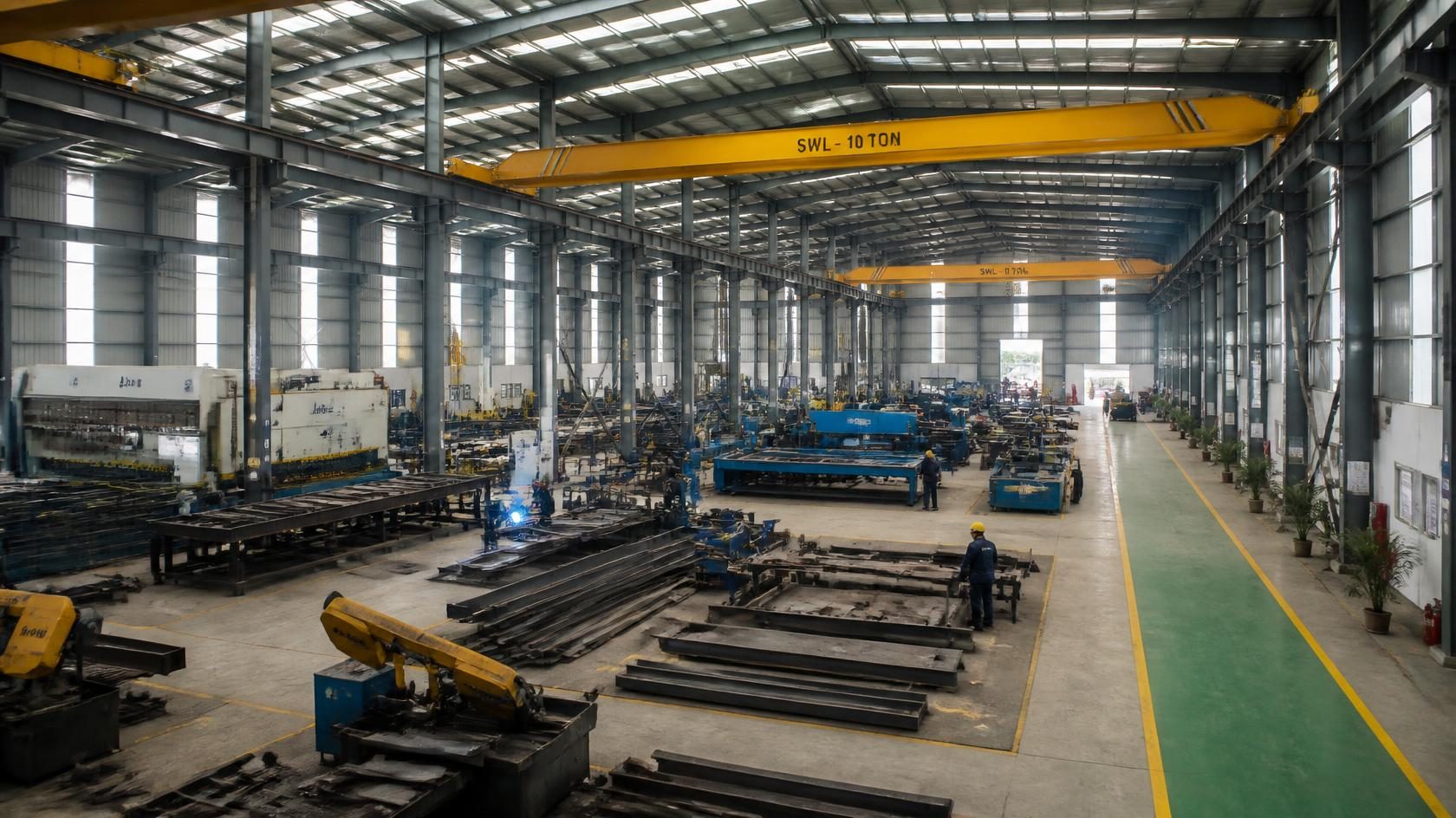
A self-paced, engineer-taught course that walks you through the modern metal-fabrication shop floor — drawing to dispatch, welding processes, cutting, forming, fit-up, surface treatment and inspection.
Course Preview
Every major activity on a modern fabrication shop floor, taught the way it actually runs.
How a fabrication job moves through the shop: drawing, nesting, cutting, fit-up, welding, inspection, dispatch.
IS / ASTM standards, plate grades, weld symbols, GD&T basics, BOM interpretation.
Oxy-fuel cutting, plasma, laser, waterjet — when each fits and how to set parameters.
Plate rolling, press brake, section bending, spring-back and tooling selection.
Shielded metal arc welding: electrode selection, parameters, positions, defects and remedies.
TIG and MIG/MAG processes, parameter selection, shielding gas, and where each fits.
Tack welding, jigs and fixtures, distortion control, dimensional accuracy.
Grinding, shot blasting, primer and paint systems, galvanising, coating thickness.
Visual, dimensional, DPT, MPI, UT, RT — what each test catches and how to read results.
WPS / PQR, weld rejection rates, rework cost, hot-work permits, shift KPIs.
Your textbook describes welding symbols. This course shows you the actual shop floor those drawings become on.
Move from helper to welder to fitter to supervisor with real shop-floor knowledge, not just theory.
Walk into interviews knowing WPS, PQR, NDT — the vocabulary every fabrication shop actually uses.
Understand how the parts you receive were made, so you can plan site work around real tolerances.
Train your team on standard processes, defect control and inspection — without pulling them off the floor.
Coming from non-core work? Get the fabrication foundation in weeks, not years of shop-floor learning.
No. The course starts from how a fabrication shop works and builds into welding, cutting, inspection and quality. ITI, diploma, B.Tech and working fabricators all follow the same content.
Yes — examples, standards and shop layouts are based on Indian fabrication shops (structural, pressure-vessel and process-equipment work).
The course covers NDT basics (what each test catches and how to read results). For full NDT certification, you'll need a separate ISNT / ASNT course — this is the foundation.
Once enrolled, you keep access for an extended period so you can revisit modules when you're back on the shop floor or preparing for an interview.
Reach out within the refund window and the team will review your case.
Enrol in the Fabrication Plant Operations course and start learning this week.